
What's a bridal garter got to do with the evil eye? Quite a lot actually.

'Something old, something new, something borrowed, something blue and a silver sixpence in her shoe' is a charming, old English rhyme that many a bride has followed on her own wedding day - be it for fun, practical reasons or just a simple desire to follow the footsteps of millions of bride's before here in enacting these words of happiness and prosperity.
But what does it all mean? Wasn't blue just slotted in to rhyme with new and shoe? No, it certainly wasn't.
Words are powerful. Afterall, using them in a special arrangement is what constitutes the making of a spell, or a hex or a curse. 'Something old, something new, something borrowed, something blue and a silver sixpence in her shoe' is an easily remembered checklist for women preparing for marriage and the blue spoken of here is more than a sprig of lavender - it's referring to blocking the evil eye and its poison on the bride and her fertility.
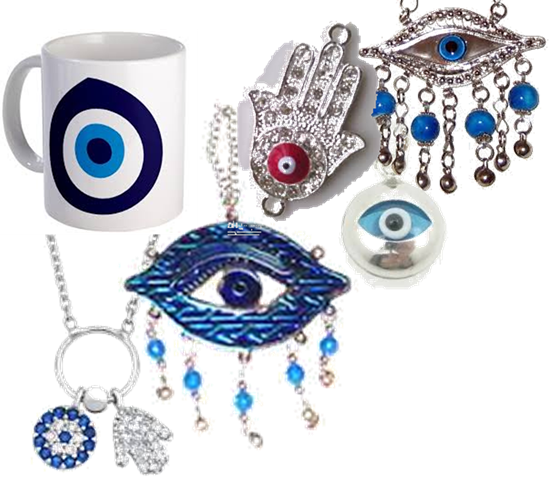 The Evil Eye is believed by some to be a curse which someone can throw on you which causes you to have bad luck and ruinous fortune. And it's not a historic remnant - its alive and kicking through many cultures to this day. In fact, there are 'elders' who are still placing these curses on unsuspecting victims and they're getting plenty of business (including online.)
If you've ever attended a wedding in the Mediterranean or Balkans, you might have noticed how prominent it still is by the proliferation of these talismans and guards against the Evil Eye - from mugs to jewellery to tiles and beads - its everywhere.
It's believed that blue - (the colour of fidelity, truth and heaven) has the power and strength to thwart and throw off the hexes and curses of the Evil Eye. Most commonly these safeguards against curses take the form of jewellery and other wearable objects.
The interesting thing about 'Something old, something new, something borrowed, something blue and a silver sixpence in her shoe' is that hundreds of years ago in Britain, it was considered good luck for the bride to wear the undergarments of a close female friend or relative who had safely given birth. Marriage was a risky time for women and never more so than when pregnant and in labour. A wedding was an opportunity to shower a women with blessings and throw off any evil intent that may have been put upon her. In an age of superstition, wealthy and prominent brides went to the extra length and expense of making sure to be surrounded by 'decoy' bridesmaids and flowergirls in matching wedding style gowns and this too was in an effort to confuse evil spirits as well as the evil schemings of men (when kidnapping was a real and present danger). The likelihood for brides not having the undergarments themselves made from a blue fabric is almost certainly down to the issue of commercial dye and fabric limitations during that age.
You can see how the underwear sharing for luck alongside blue to ward off evil combined over time and today, the closest thing to a bride's underwear is her garter and this is traditionally blue. The bride to be puts it on before tying the knot, and afterwards her husband assumes the responsibility for her safety and he is the one who removes it.
Nowadays, many brides wear a blue garter for the simple convenience of their something blue and they aren't too worried about Evil Eyes or any other kind of curse upon their fertility or household. And we all know and (either love or hate) the time honoured tradition of the 'tossing of the garter' which is still commonplace at most of the wedding's I've attended...but that's another blog post.

